One of the first questions people ask about treatment is, “Am I a good candidate for CoolSculpting?”
The answer is not based on one number, and it is not as simple as being under a certain weight or BMI.
CoolSculpting candidacy depends on the area being treated, the amount and shape of the fat, the type of result you want, and whether treatment can realistically create a natural-looking change. Two people with the same weight or BMI may receive completely different recommendations.
At Elite Contours, the goal of a consultation is not simply to determine whether an area can be treated. It is to determine whether CoolSculpting is likely to give you the kind of result you are hoping for.
The best way to find out if CoolSculpting is right for you is to schedule a consultation. These one on one educational conversations are designed to do.
What makes someone a good candidate for CoolSculpting?
A good candidate for CoolSculpting typically has a specific area of fat that has not changed much with diet, exercise, or changes in body weight.
This may include fullness around the:
Abdomen
Flanks or love handles
Upper arms
Chin
Inner or outer thighs
Bra or back area
Banana roll
See our full list of CoolSculpting treatment areas. CoolSculpting is most useful when the concern is about shape or proportion rather than overall weight loss.
Rebecca often explains the difference this way:
CoolSculpting addresses shape, while weight loss addresses overall mass and the number on the scale.
Someone may lose weight and still notice that one area remains fuller than the rest of the body. That is often the type of concern CoolSculpting is designed to address.
A strong candidate also has realistic expectations. CoolSculpting can reduce fat in a targeted area, but it does not create the same degree of change as surgery. The result should look like a more refined version of your natural shape, not a completely different body.
Do you have to be near your goal weight?
Many people searching for information about CoolSculpting candidacy are told they must be at or near their goal weight before treatment.
That is often useful guidance, but it is not an absolute rule.
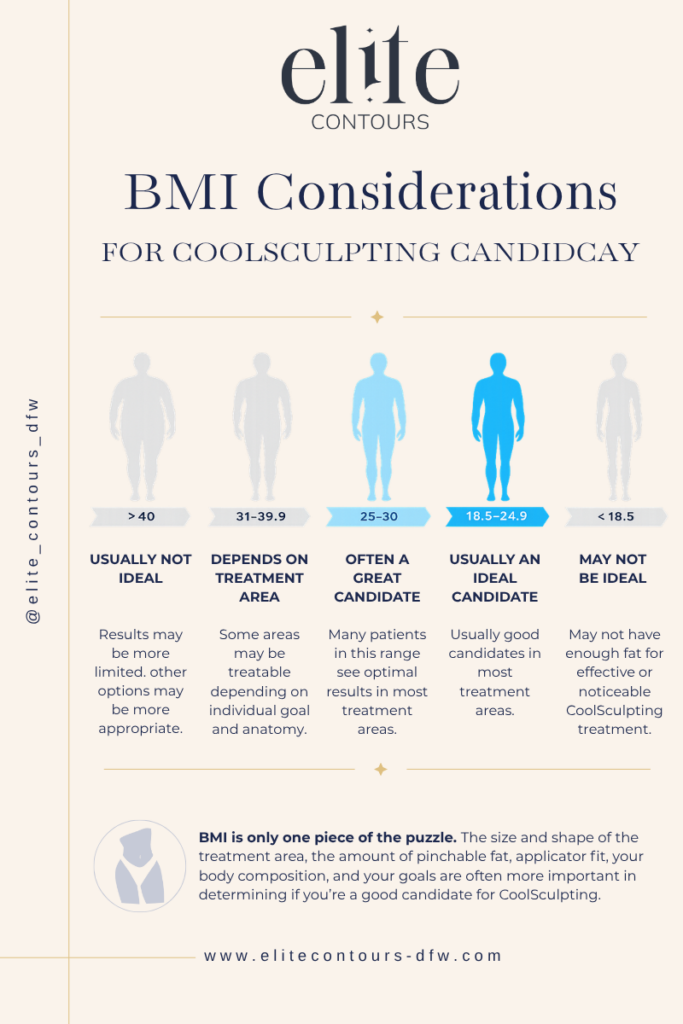
For many body areas, patients with a BMI around 24.9 to 30 may be good candidates. However, BMI alone does not determine whether treatment is appropriate. The treatment area matters.
For example, someone with a higher BMI may still be a good candidate for treatment under the chin or on the upper arms. In other cases, a lower BMI does not automatically mean someone will get a good result.
What matters more is:
Whether there is a defined area of treatable fat
Whether the available applicators fit the area properly
Whether the proposed treatment will improve the overall shape
Whether the expected result matches the patient’s goal
The question is not simply, “What is your BMI?”
The more useful question is, “Can this area be treated in a way that creates the result you are looking for?”
Is CoolSculpting for weight loss?
No. CoolSculpting is not a weight-loss treatment.
Weight loss changes overall body mass and may reduce fat throughout the body. CoolSculpting is used to target a specific area of fat and improve contour.
That distinction is important.
If your main goal is to lose a significant amount of weight, CoolSculpting is probably not the right first step. If your weight changes but the same areas continue to bother you, treatment may still be worth considering.
This is common in the abdomen, flanks, arms, and under the chin. These areas may remain fuller even when someone is otherwise comfortable with their weight.
How much weight should you lose before CoolSculpting?
There is no universal number. Some people are already at a comfortable weight and want to address a specific pocket of fat. Others are still actively losing weight and may benefit from waiting.
Rebecca may recommend postponing treatment when someone is planning a significant amount of additional weight loss. This is not because treatment is unsafe at a higher weight. It is because major body changes can affect which areas should be treated and how the final result will look.
On the other hand, it is not always necessary to reach a specific goal weight first. If an area has remained consistent through previous weight changes, it may still be appropriate to treat.
The recommendation depends on the area, your plans, and the result you want.
Who Should Not Get CoolSculpting?
here are times when CoolSculpting may not be the right choice.
Rebecca may recommend another option when:
The primary goal is significant weight loss
The main concern is loose skin rather than fat
The desired result would require a surgical level of change
The treatment area is unlikely to respond in a way that matches the patient’s expectations
A medical condition makes treatment inappropriate
Some health conditions and contraindications require an individualized review before treatment.
In those situations, the conversation may sound less like “You are not a candidate” and more like:
“I do not think this will give you what you’re looking for” or “There may be another option that aligns better with your goals.”
That kind of recommendation is part of responsible treatment planning. The purpose of the consultation is not to make every person fit the treatment. It is to determine whether the treatment fits the person.
What if your main concern is loose skin?
Loose skin does not automatically rule out CoolSculpting.
The more important question is how you feel about the skin and what you want treatment to accomplish.
If your goal is to reduce the fat underneath the skin, CoolSculpting may still be appropriate. If your primary concern is skin tightening, CoolSculpting is unlikely to address that concern on its own.
Some people are comfortable with their skin and simply want less fullness in a specific area. Others may feel that removing fat without tightening the skin would not give them the result they want.
Even when someone may eventually be a good candidate for CoolSculpting, the timing may not be right.
Rebecca may recommend waiting if you are:
Recently postpartum
Actively trying to conceive
Planning a significant amount of weight loss
Planning a surgical procedure that may change the same area
Waiting allows the treatment plan to be based on a more stable picture of your body and your goals.
This is especially important when pregnancy, surgery, or major weight changes could alter the area being considered.
Can you get CoolSculpting while taking a GLP-1 medication?
Taking a GLP-1 medication does not automatically make someone ineligible for CoolSculpting.
The main consideration is whether your body is still changing.
If you are actively losing a significant amount of weight, it may be more useful to wait until you are closer to your expected long-term shape. If your weight has slowed or stabilized and you still have a specific area of stubborn fat, CoolSculpting may be worth discussing.
This is best evaluated during a CoolSculpting consultation because the right timing varies from person to person.
What happens during a CoolSculpting consultation?
A CoolSculpting consultation should involve more than a quick look at the treatment area.
At Elite Contours, Rebecca evaluates:
The area you want to change
The amount and distribution of fat
The size and shape of the treatment area
Which applicators may fit
Your desired outcome
Whether the proposed treatment will look balanced
The number and placement of treatments that may be appropriate
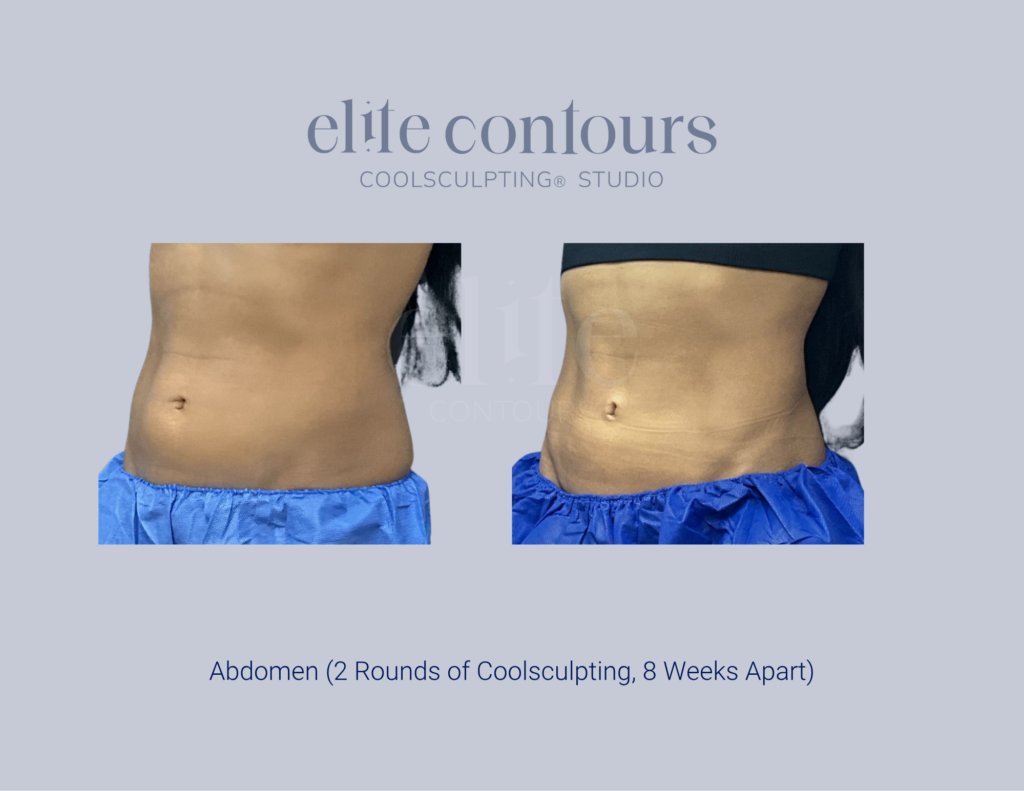
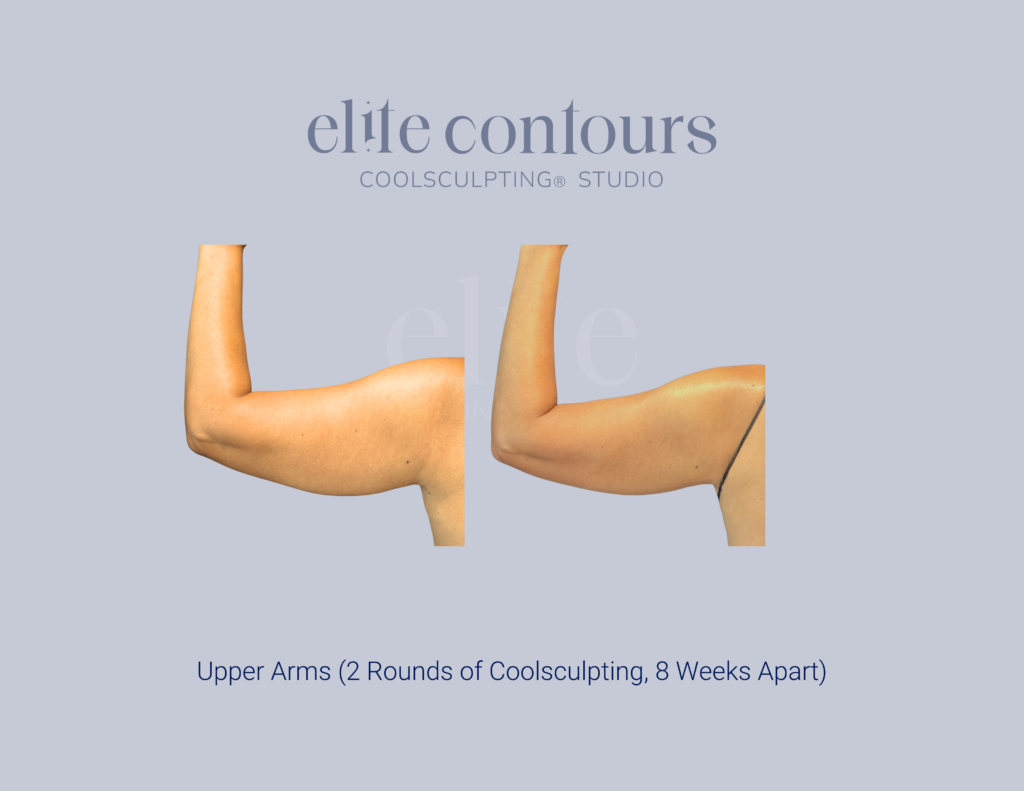
You will also have the opportunity to review before-and-after photos from patients treated at Elite Contours. Seeing results from people with similar concerns can help clarify what treatment may realistically accomplish.
Rebecca performs the consultation, treatment planning, and follow-up care herself. This means you work with the same provider throughout the process rather than being passed between multiple team members. That continuity is especially useful when treatment requires judgment about proportion, placement, and long-term results. The practice’s consultation-first approach, direct provider access, and emphasis on realistic expectations are central to its positioning.
Why provider judgment matters
CoolSculpting uses standardized technology, but treatment planning is not one-size-fits-all.
The applicator must fit the area correctly. Placements must be chosen carefully. The provider also has to consider how reducing one area may affect the overall shape of the body.
This is why two people with similar body types may receive different plans.
An experienced provider should be able to explain not only where treatment can be performed, but why a particular plan makes sense and what kind of change is reasonable to expect.
Rebecca brings more than five years of CoolSculpting experience and 20 years of healthcare experience to that process. Her approach emphasizes education, transparency, continuity of care, and natural-looking results rather than aggressive claims or one-size-fits-all recommendations.
Review real CoolSculpting results
Before-and-after photos are one of the most useful tools for understanding CoolSculpting candidacy.
They show how treatment affects shape, proportion, and specific areas of fat. They can also help set realistic expectations about the degree of change that may be possible.
Frequently Asked Questions
Am I a good candidate for CoolSculpting?
You may be a good candidate if you have a specific pocket of stubborn fat, want body contouring rather than weight loss, and have realistic expectations about the result. A consultation is the best way to determine whether the area can be treated effectively.
Who is a candidate for CoolSculpting?
Candidates are typically adults with localized fat in areas such as the abdomen, flanks, arms, chin, thighs, or back. The recommendation depends more on anatomy and goals than on a specific weight or BMI.
Who should not get CoolSculpting?
CoolSculpting may not be appropriate for someone seeking major weight loss, someone whose primary concern is loose skin, or someone with a medical contraindication. It may also make sense to wait during pregnancy planning, significant weight loss, or before a planned surgical procedure.
Is CoolSculpting for weight loss?
No. CoolSculpting is intended for targeted fat reduction and body contouring. It does not replace weight-loss treatment.
How much weight should I lose before CoolSculpting?
There is no required amount. Some patients may benefit from waiting until after significant weight loss, while others have areas of stubborn fat that remain regardless of weight.
Can someone with a BMI over 30 get CoolSculpting?
Possibly. BMI is only one factor. The treatment area, applicator fit, fat distribution, and desired result are often more important.
Can CoolSculpting tighten loose skin?
CoolSculpting is designed to reduce fat, not tighten skin. Whether it is still appropriate depends on whether your main concern is fat reduction or skin laxity.
Find out whether CoolSculpting is right for you
The best way to determine whether you are a good candidate for CoolSculpting is through an individual assessment.
Rebecca will evaluate the area you want to treat, discuss your goals, and explain whether CoolSculpting is likely to create the kind of change you want. If she believes another option would be more appropriate, she will tell you. If you’re a good candidate and complete your recommended treatment plan, you may also be eligible for our Results Assurance Program, which provides added peace of mind around the treatment planning process.
Elite Contours is located in Lewisville and serves patients from Frisco, Plano, and North Dallas. Book a consultation to learn more.